


Investing in agriculture is gaining interest among investment funds, particularly in response to the uncertainty and volatility affecting many traditional financial instruments.
For several decades, agriculture—with some exceptions—has not been considered a strong investment. The continuous decline in wholesale prices, combined with steadily rising input costs (agricultural fuel, fertilizers, seeds, pesticides), climate volatility, water restrictions, and limited labor availability have made the sector a risky and complex activity with a high probability of financial losses.
This situation is reflected in two clear indicators:
-
Average farmer age: In many developed countries it exceeds 60 years, and in some cases even 65. There is no sufficient new generation to replace them.
-
Abandonment of agricultural land: In several developed countries, many farms are being abandoned because product prices do not cover production costs.
However, this long-term trend of low prices—affecting both food products and agricultural land—experienced over the past 30 years is expected to change in the near future, leading to agricultural product shortages. The main driver is global population growth, particularly in Asia, along with increasing competition for resources.
Future agriculture will need to produce with:
-
Less water
-
Less land (due to competition with urban development and protected areas)
-
Fewer fertilizers (due to rising oil prices)
-
Less petroleum-based plastics
-
Fewer available chemical products (due to stricter residue regulations)
-
Less labor
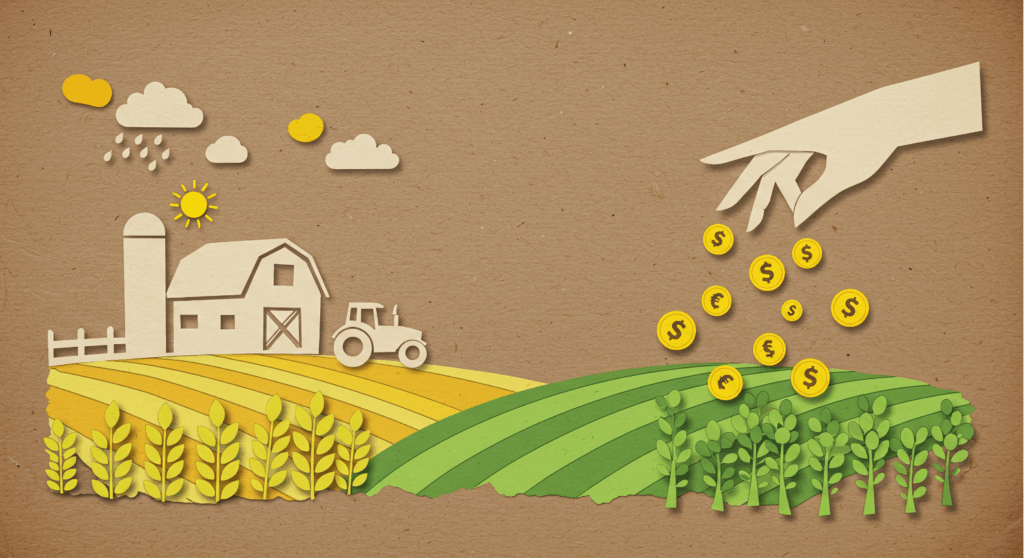
With land prices depressed in many regions of the world and ongoing global financial uncertainty, investing in agriculture may represent a solid option for diversification and for adding stability to an investment portfolio.
Key Considerations for Non-Agricultural Investors
Investing in agricultural assets requires thorough analysis, especially for those unfamiliar with the sector. The following are the key aspects that should be carefully evaluated:
1. Land Selection
Not all farmland is the same. Productivity can range from 1–2 tons per hectare to 8–10 tons per hectare in land dedicated to cereal crops.
Before purchasing, it is essential to conduct a comprehensive soil profile analysis, including structure, fertility, drainage, water availability, and the presence of contaminants or persistent pesticides.
2. Crop Selection
Choosing the right crop is critical. The first decision is whether to invest in perishable or non-perishable products.
Fruits and vegetables generally offer higher productivity per hectare but require additional infrastructure such as storage facilities and cold rooms.
3. Irrigated vs. Rainfed Land
Rainfed land is more affordable and requires less infrastructure, but it depends entirely on rainfall, which can make the difference between profit and loss.
Irrigated land is more expensive and requires reliable water availability, infrastructure maintenance (pumps, pipes, etc.), and water usage fees. However, it provides more stable and predictable production.
4. Logistics
Proximity to major cities or ports is a decisive factor.
With rising fuel costs, being close to markets—whether by road or sea—can determine whether a project is profitable or unviable.
5. Labor and Management
Investing in agriculture is not just about acquiring land—it is about people.
Field workers, drivers, harvest crews, supervisors, and managers are all required. Agricultural labor availability is increasingly limited and competition for skilled workers is expected to intensify.
6. Production vs. Processing
Agri-food processing is often more stable and profitable than primary production.
It is less dependent on climate, diseases, or field-level risks.
Processed products—such as canned goods, dehydrated products, frozen foods, purées, juices, and similar items—can be stored for months or years, with margins generated from processing rather than cultivation.
7. Food Safety and Traceability
Food safety is a fundamental requirement for any agricultural or food operation.
Vertical integration—through acquisitions or strategic partnerships—is a common approach to ensure traceability and integrity throughout the entire value chain.
Conclusion: How to Invest in Agriculture Effectively
There are many additional factors to consider before investing in agriculture.
For investors without sector experience, our recommendation is to partner with an agricultural investment expert who, together with a financial analyst, can properly assess opportunities, value assets, and help avoid costly mistakes.
FruitProfits is an agri-industrial consulting company that advises clients on technology, markets, and agricultural investments.
For further inquiries: manuel.madrid@fruitprofits.com